

Let’s Talk About Hay Fever in Cape Town
Allergic rhinitis, commonly known as “hay fever”, affects up to one in four people worldwide and is one of the most common reasons for visiting a GP. It occurs when the immune system overreacts to substances in the airborne environment, causing inflammation of the lining of the nose.
Most people think of hay fever as a condition that only appears for a few weeks each spring. Many Capetonians, however, experience symptoms throughout the year.

What Causes Allergic Rhinitis?
Allergic rhinitis develops when someone who has become sensitised to an allergen breathes it in. Their immune system produces allergy antibodies (IgE) in response to the allergen. On subsequent exposure, these antibodies trigger the release of histamine and other inflammatory chemicals from specialised immune cells called mast cells, resulting in the familiar symptoms of hay fever.
A second wave of inflammation - known as the late-phase allergic response - causes ongoing swelling and nasal blockage, meaning symptoms may persist long after allergen exposure. This is one of the reasons why regular use of anti-inflammatory nasal steroid sprays is often needed for effective symptom control.
Common airborne allergens include house dust mite, pollen from grasses, trees and weeds, mould spores, cats, dogs and cockroaches.

What are the Symptoms of Allergic Rhinitis?
Frequent sneezing
Itchy nose
Runny nose
Nasal blockage or congestion
Itchy, watery or red eyes
Itchy throat or ears
Postnasal drip
Reduced sense of smell

What are the Consequences of Uncontrolled Allergic Rhinitis?
Although often dismissed as a minor nuisance, allergic rhinitis can have a significant impact on quality of life. It may disrupt sleep, impair concentration and productivity, reduce school or work performance, and make asthma more difficult to control.
Which Allergens Drive Allergy Symptoms in Cape Town and When?
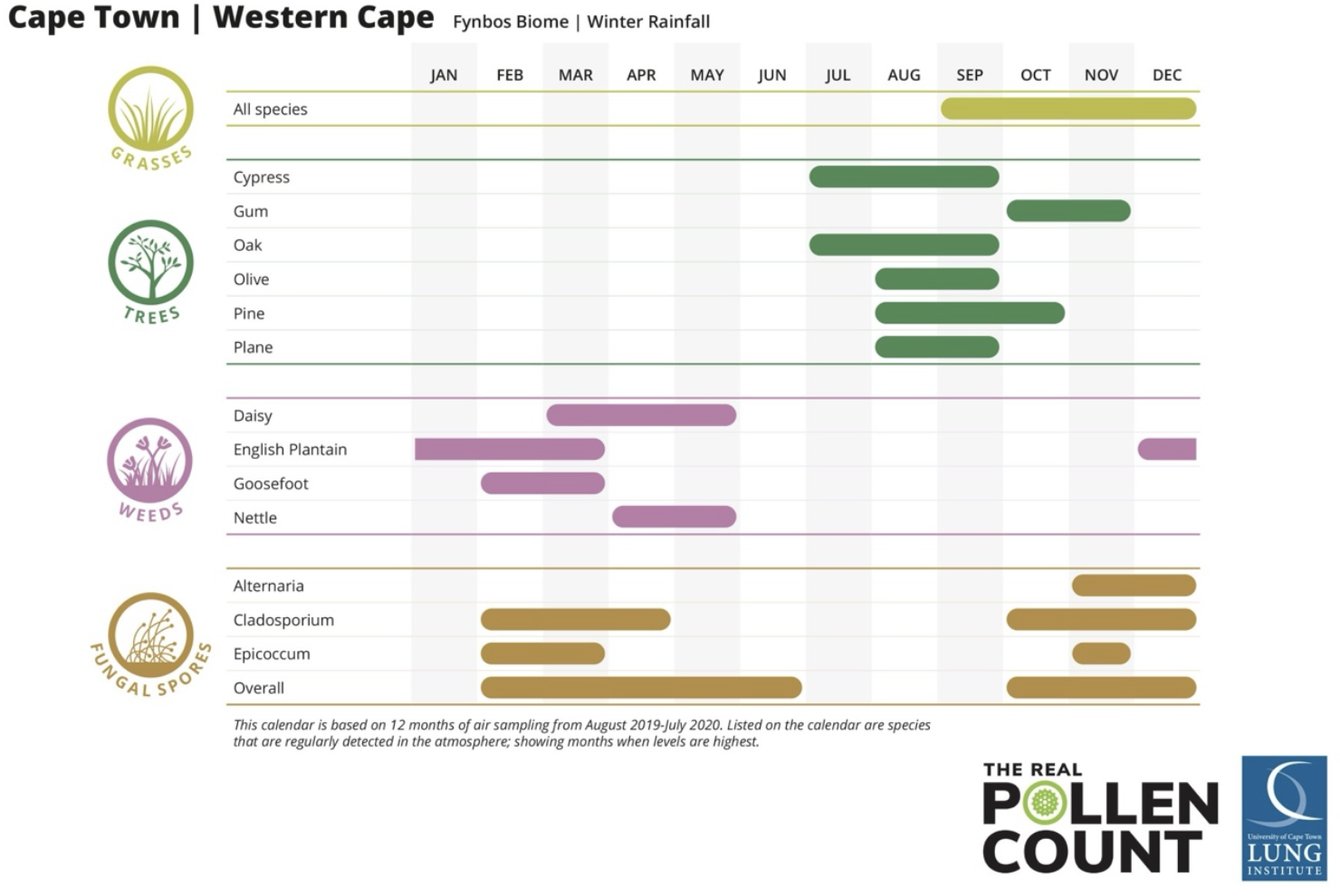
According to the real-time airborne-pollen monitoring service, The Real Pollen Count, important seasonal allergens in the Cape Town pollen calendar include:
Grass pollens: peak mainly September to December
Tree pollens: including cypress, oak, olive, pine and plane trees, with peaks from late winter into spring
Weed pollens: typically late summer through autumn depending on the species
Fungal spores: present for much of the year, with peaks in autumn and spring.
In addition to seasonal pollen allergies, house dust mite allergy is an extremely common driver of hay fever symptoms. House dust mites are microscopic, 8-legged relatives of spiders that feed on tiny flakes of human skin and are found in household dust, particularly in mattresses, pillows, bedding, carpets and upholstered furniture. They thrive in humid and coastal environments and are a common cause of allergy symptoms in Cape Town throughout the calendar year .
How is Allergic Rhinitis Treated?
The South African Allergic Rhinitis Working Group recommends the following:
Education
Education is the cornerstone of effectively treating allergic rhinitis. Allergic rhinitis needs to be understood as a chronic condition driven by exposure to allergens. Managing it successfully usually requires a long-term approach rather than treating symptoms only when they become severe. Your treatment plan should be tailored to your symptoms, lifestyle and budget in discussion with your doctor. Education must include a clear explanation of nasal spray technique, which is a key skill in managing your symptoms:
First, ensure your nose is not completely blocked. Gently blow your nose or perform a saline rinse first if needed. If the nose is completely blocked, much of the medication will become trapped in mucus instead of reaching the lining of the nose where it is needed.
Shake the bottle.
Lean your head slightly forward and close the opposite nostril.
Aim the nozzle towards your ear (on the same side as the nostril you are spraying into), not towards the middle wall (septum) of the nose.
Administer one puff of medication.
After the puff, try not to sniff but rather pinch the nose between your thumb and index fingers while holding the head neutrally forwards for 10 seconds.
Repeat the process in the other nostril.
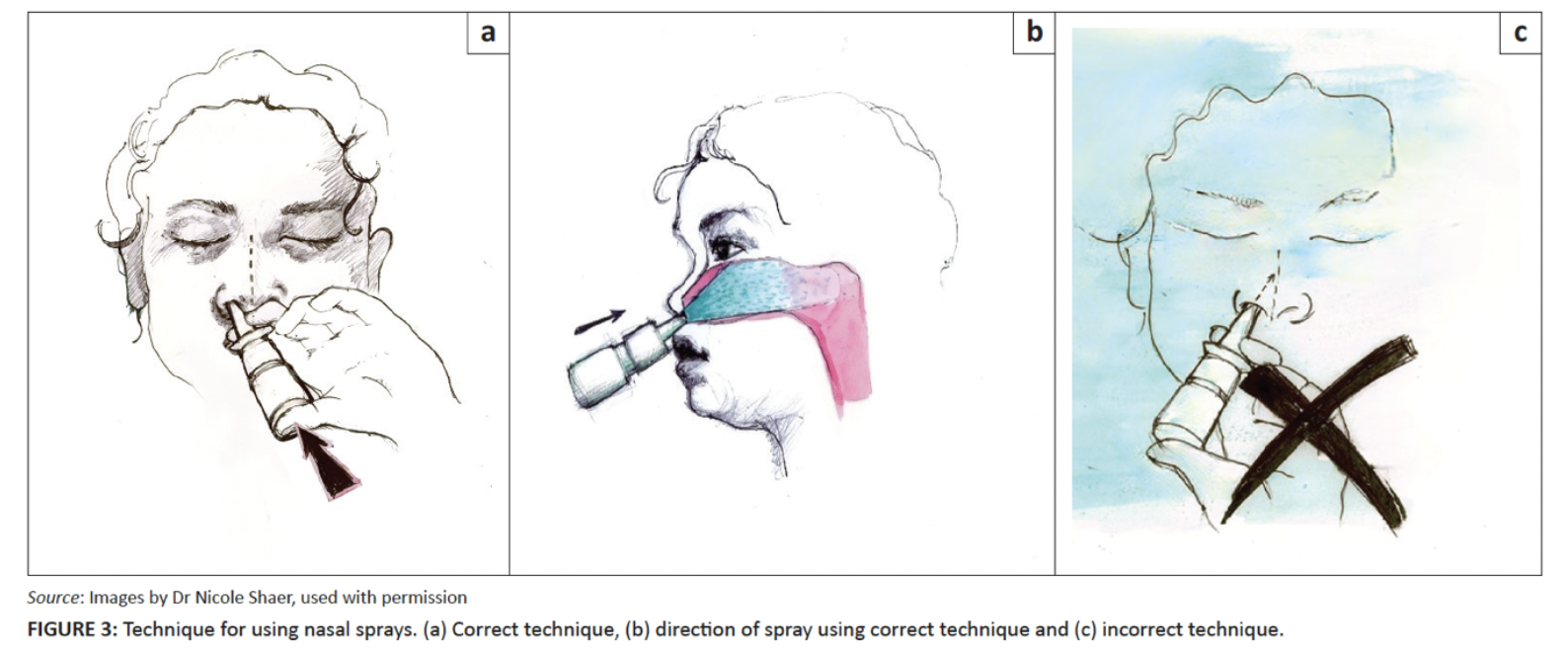
If you can taste the spray running down the back of your throat, much of the medication is being wasted. Adjusting your technique can make a big difference.
Reduce Allergen Exposure Where Possible
Reducing exposure to the allergens that trigger your symptoms can be an important part of managing allergic rhinitis. However, environmental control measures can sometimes be costly or impractical, and not everyone needs to make extensive changes to their home or lifestyle. These measures are most beneficial when allergy testing has confirmed sensitisation to a specific allergen, allowing efforts to be focused where they are most likely to help. The Allergy Foundation South Africa (AFSA) provides practical, evidence-based advice on reducing exposure to common allergens such as house dust mites, pollen, mould and cockroaches: https://www.allergyfoundation.co.za/patient-information/en/allergens/

Saline Nasal Irrigation
This is one of the simplest and most effective treatments for allergic rhinitis and is often overlooked. Saline irrigation as an inexpensive and effective adjunct to treatment, ideally before using a nasal steroid spray.
Regular saline nasal irrigation helps:
Wash away pollen and allergens
Remove mucus
Improve the effectiveness of nasal sprays
Improve mucociliary clearance
Reduce symptom severity
A variety of saline irrigation bottles are available from most pharmacies. The saline solution can either be prepared using commercial sachets or mixed safely at home. Further instructions on saline nasal irrigation can be found here on the AFSA website: https://www.allergyfoundation.co.za/allergy-information/learn-how-to/nasal-spray-and-
washouts/
Nasal Steroid Sprays: the Foundation of Treatment
Modern intranasal corticosteroid sprays are considered the most effective single treatment for allergic rhinitis because they improve all major nasal symptoms, including congestion, which antihistamines treat less effectively.
It's important to know that they are not "instant" treatments - improvement usually begins within the first day, but maximum benefit often takes around two weeks of regular use.
For people with moderate to severe symptoms, combination nasal sprays containing both an antihistamine and a corticosteroid (such as Dymista or Ryaltris) are excellent for providing both instant relief and long-term control and are now recommended early when available. Combination nasal sprays have been shown to be significantly more effective at controlling symptoms compared to oral antihistamines alone.
Oral Antihistamines
Newer-generation antihistamines remain useful, particularly for sneezing, itching, and runny nose However, they are generally much less effective at relieving nasal blockage, which is often the symptom people find most troublesome. Older sedating antihistamines should generally be avoided because they can impair concentration, driving ability and learning.
Allergen Immunotherapy
For some people, symptoms remain troublesome despite using medication correctly and taking steps to reduce allergen exposure. In these cases, allergen immunotherapy (also known as desensitisation) may be an option. Unlike medications that simply relieve symptoms, allergen immunotherapy is the only treatment that can modify the underlying allergic disease. It works by gradually retraining the immune system to become less sensitive to the allergens that trigger symptoms. Treatment involves carefully controlled doses of the relevant allergen, given either as tablets or drops under the tongue (sublingual immunotherapy) or by regular injections (subcutaneous immunotherapy), usually over a period of three years or longer.
Immunotherapy has been shown to:
Reduce allergy symptoms
Decrease the need for medication
Provide long-lasting benefits that can persist after treatment has finished
In some patients, reduce the risk of developing asthma or becoming allergic to additional allergens
Immunotherapy is most effective for people with confirmed allergies to air-borne allergens whose symptoms remain poorly controlled despite appropriate medical treatment. As treatment requires a long-term commitment and is not suitable for everyone, your GP can refer you to a specialist allergy centre that offers immunotherapy to determine whether it is the right option for you.

Take-home Messages
Allergic rhinitis is much more than "just hay fever." It is a common condition that can have a major impact on daily life, but it is also highly treatable.
With an accurate diagnosis, appropriate medication, correct nasal spray technique, sensible allergen avoidance and, where appropriate, allergen immunotherapy, most people can achieve excellent long-term symptom control and enjoy life without constantly reaching for the tissues.
Warmest,
Dr Cathryn McDougall | MBChB (UCT), Dip Allerg (SA)

Our September blog post was written by Dr Cathryn McDougall. She is an Allergy GP at the UCT Lung Institute. This article has been written in her personal capacity and does not necessarily reflect the views of the UCT Lung Institute,
We wish to thank her for her valuable contribution to The B Blog.
