

Let’s Talk About Sleep
Overview & Introduction
Sleep has been a very topical conversation in our practice recently. As the year gathers momentum and we find ourselves juggling new routines, responsibilities, and challenges, sleep is often one of the first things to suffer.
Modern life places many demands on us. Work schedules, family commitments, stress, screen time, travel, and shifting routines can all disrupt our natural rhythms. Over time, this can quietly erode our sleep hygiene and leave us feeling tired, wired, and out of balance.
Yet sleep is not a luxury - it is foundational to our physical health, mental clarity, emotional resilience, and overall wellbeing. Most of us long for deep, restorative rest, but many are unsure how sleep truly works or what practical steps can make a meaningful difference.
There are excellent resources available on this topic. We highly recommend Why We Sleep by Matthew Walker, which offers fascinating insights into the science of sleep and its profound impact on health. That said, in the midst of busy lives, we also recognise the value of simple, clear, and practical guidance.
In this blog post, we will explore:
● How sleep works
● Why it matters so much
● Practical steps to improve sleep hygiene
We hope that this serves as an easy, helpful starting point toward healthier, more restorative sleep.

How Sleep Works
Transitions between sleep and wakefulness are regulated by a complex interplay between many regions of our brains. Primarily, these systems maintain our circadian rhythm; the 24-hour internal body clock that regulates our sleep-wake cycles, hormone release, digestion, body temperature and other functions.
Our circadian rhythm is primarily reliant on the teamwork of two hormones - cortisol and melatonin. Cortisol is known as the “stress hormone,” and we need it to increase a healthy amount during the day to bring about wakefulness, alertness, motivation and productivity. It is highest in the morning and decreases throughout the day. Melatonin is the hormone that prepares our body for sleep. It is at its lowest in the day and naturally increases towards bedtime. Interestingly, the production of melatonin is reliant on darkness and disrupted by light. This is why we start to feel sleepy in dim light and as night falls, as well as why bright lights and screens wake us up.
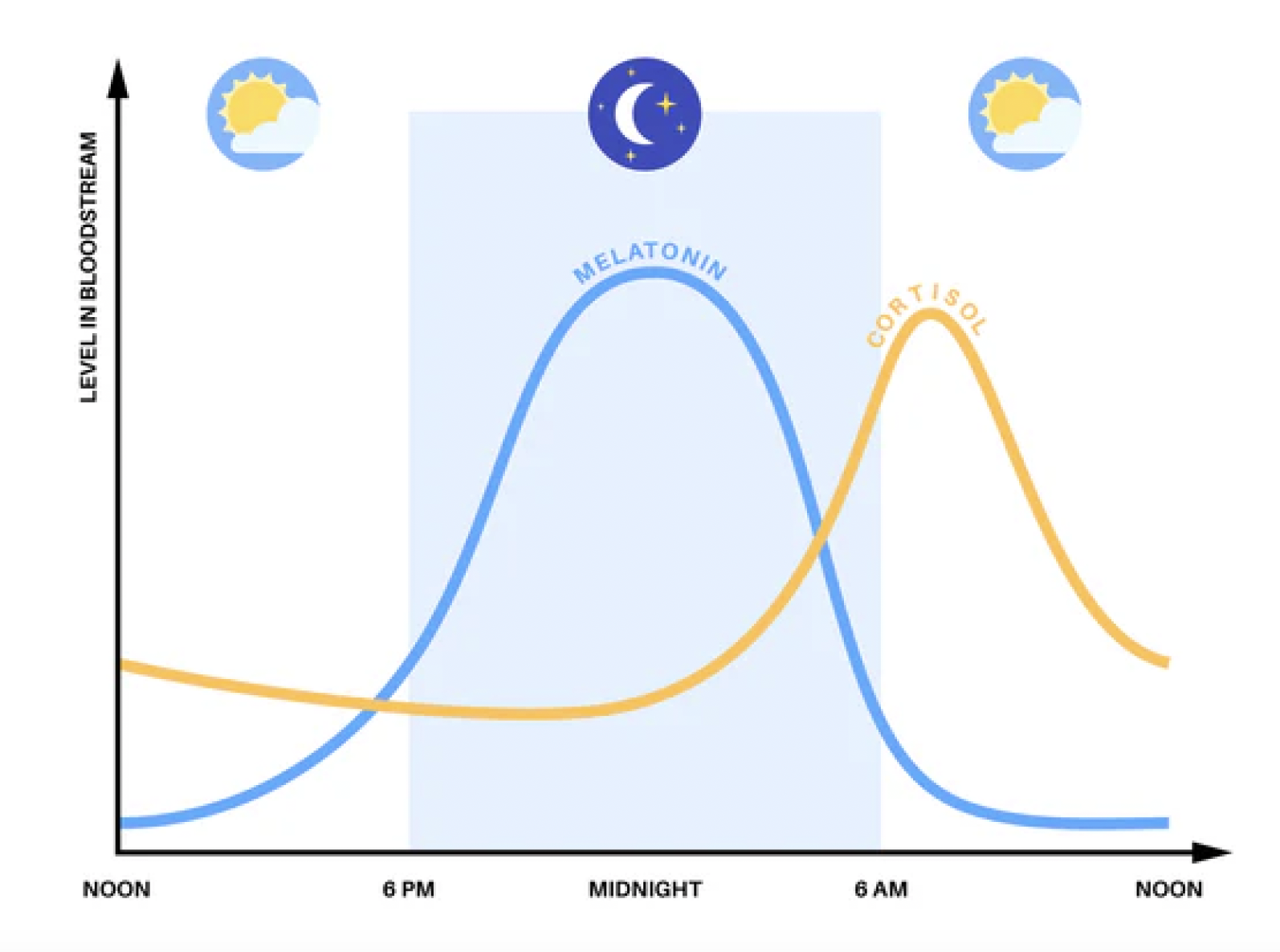
The circadian rhythm shifts and changes throughout our life span, with infants needing the most sleep, teenagers having the latest onset of sleep, and our total sleep duration decreasing as we age. Things that can negatively affect our circadian rhythm include poor sleep hygiene, irregular schedules, shift work, jet lag and sleep disorders.
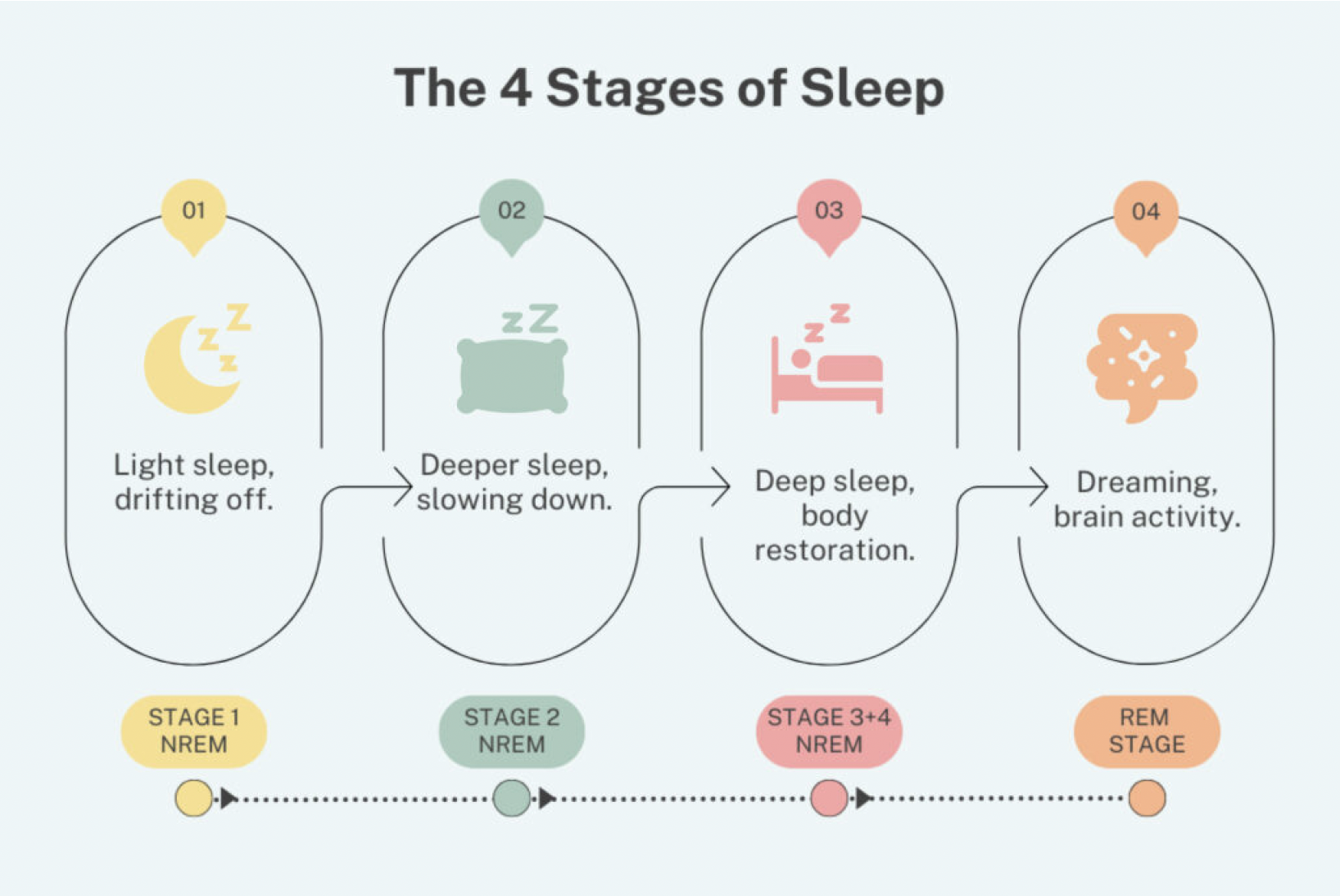
In adults, sleep typically occurs in 4-5 repeating cycles of 90-110 minutes duration that contain a mixture of REM sleep (rapid-eye movement sleep) and NREM sleep (non-REM sleep) which includes light, deep and deepest sleep. The different stages of sleep each have different functions and are all important for our cognitive, emotional, social and physical thriving. Although we cycle through all of the stages in each sleep cycle, the duration of each stage differs throughout the night. For example, the bulk of our deep sleep occurs in the early part of the night, while periods of REM sleep lengthen and deep sleep shortens as morning approaches.
In total, we spend about 5% of our total sleep duration in light sleep and 45% in deep sleep.
Deep sleep is when our heart rate, blood pressure and body temperature decrease. This is most important for memory consolidation and is the stage when teeth grinding can happen. We then spend 25% of our sleep in the deepest phase. This is the hardest stage to be awoken from, and if you wake up in this stage you may feel sluggish and have brain fog for up to an hour after waking. This stage is most important for physiological renewal, repair and recovery as well as tissue growth and immune strengthening. This is the stage when sleepwalking can happen.
REM sleep is the last stage and makes up approximately 25% of our sleep time. This stage is associated with dreaming and although our muscles are relaxed, our eyes and diaphragm move, leading to rapid eye movements under our eyelids and faster, more irregular breathing. It is the easiest time to wake up spontaneously and is important for brain health. We feel the most alert if we wake up during REM sleep rather than any of the other stages.
Bottomline, sleep is essential. It is the time when our body recovers from our day, rebuilds and strengthens, solidifies our learning and memories, performs immune functions as well as a host of other processes. Sleep affects almost every type of tissue and organ system in our bodies. Research shows that chronic lack of sleep or ongoing poor sleep quality are significant risk factors for chronic diseases such as high blood pressure, diabetes, heart disease, depression, obesity and even cancer.
Good news! Lack of sleep is treatable, and good sleep is very trainable.
Healthy Sleep Principles
Here are some guiding principles when it comes to training your body for good sleep…
1. Stick to a regular sleep schedule, especially a consistent wake up time. This should ideally also apply to weekends and holidays. The purpose of this is to develop a robust circadian rhythm. Your sleep schedule should include:
Windown time - 1 hour before bedtime, put away electronics, keep lights dim and noise levels lowered. Consider having a hot shower/bath. Do relaxing activities such as reading, gentle bedtime yoga, meditation, prayer, colouring in/drawing, and journaling. Get into bed once you are sleepy.
Bedtime - lights out at the same time every night
Wake-up time - research suggests this is the most important time to keep consistent. Even after a poor night of sleep. Open the curtains, turn on the lights, get early morning sunlight - turn that melatonin off for optimal alertness and circadian rhythm training.
Consistent meal times and regular exercise also contribute to a healthy sleep rhythm.
2. Teach your body that your bed is for sleep and intimacy only!
Avoid watching TV, eating, and working in bed.
Stay in bed only for the duration of sleep/rest time. Aim to reduce the amount of time you spend in bed awake.
If it is taking you more than 20 minutes to fall asleep at any time during the night, get out of bed and continue a restful, “boring” activity in dim lighting. When you feel sleepy, return to bed to try again.
Restrict your time in bed to only how long you need to feel refreshed. Everyone is different but, on average, adults need 7.5-8 hours of sleep every night. Limit times of fragmented, shallow sleep.
3. Create an environment conducive to high quality, deep sleep.
Keep your room cool. Remember, your core body temperature needs to drop to initiate deep sleep.
Sleep in a dark room. Use block-out curtains or eye covers if needed.
Limit noise. Use ear plugs or a white noise source if needed.
4. Identify and reduce things that may be affecting your ability to sleep:
Caffeine - caffeine has a long half life and is found in coffee, normal tea, green tea, energy drinks and chocolate. Have your last caffeine fix before 2pm. Then switch to herbal teas and other caffeine free alternatives.
Avoid long naps, especially in the late afternoon. If you feel sleepy during the day, have a short nap (30mins - 1 hr) before 3pm. Napping decreases our “sleep debt” and can lead to difficulty initiating and maintaining sleep.
Electronics - blue light tells the part of our brain responsible for sleep that it is time to be awake. Even devices with the blue light reduced still significantly stimulate our brains.
Vigorous exercise - endorphins from high intensity exercise are stimulating; aim to have this completed 2 hours before bedtime.
Alcohol - alcohol significantly worsens sleep initiation, cycle stages, duration and quality and should be avoided before bed.
Greasy or “heavy” foods before bedtime
Smoking - especially in the evening as nicotine disturbs sleep
Excessive fluid consumption - limit night time bathroom trips by limiting fluid intake in the evenings
Stress - avoid taking problems to bed and continuing to “chew” on them. Take 15-30 mins before your wind down time to write a “worry list” or “to do list” to tackle the next day.
Sleep anxiety - it is totally normal to have times in our life when we sleep less than usual or our sleep is disturbed. A short period of sleep disruption will not impact your long-term health. Combat the “lack of sleep catastrophising”. Do not check the time! This worsens sleep pressure and anxiety. If you are really struggling with this - psychology sessions can be very helpful for learning sleep strategies.
If you only remember 3 things:
1. Aim to wake up at the same time every day
2. Don’t lie awake in bed - only go to bed when sleepy and get up if needed.
3. The power of the wind down - dim lights and avoid anything that stimulates your brain or emotions before bed.
Give your body a couple of weeks to get into a healthy circadian rhythm - sleep isn’t fixed overnight (pun intended haha). In some cases, short-term medication may help. Remember, there are some diagnosable sleep disorders that may make sleep difficult even with the above strategies.
If you feel very distressed about your sleep, continue to struggle after a couple of weeks, snore very loudly, stop breathing while you sleep, have extreme daytime sleepiness or fall asleep at inappropriate times without being able to control it, please make an appointment to come and see your GP. We are here to help.
Hopefully you will find this practical sleep guide helpful! We wish you deep and restful sleep.
Warmest,
Drs Robynne Glasser & Lauren Goliath